
Where should you start with Colombian food?
Start with the region you are visiting and ask what is made locally. Colombian food is not one fixed national menu. Bogotá’s potato soups, an Antioquian platter, a Tolima tamal and a Caribbean seafood dish reflect different ingredients, climates and histories.
The menu below is a practical first pass through dishes commonly highlighted by Colombia’s official tourism information. It is not a ranking and it cannot represent every community or family recipe. Use the region label as a prompt to ask a better question at the table.
12 dishes to recognize
These are representative regional dishes, not a universal checklist. Recipes and ingredients change from one kitchen to the next.
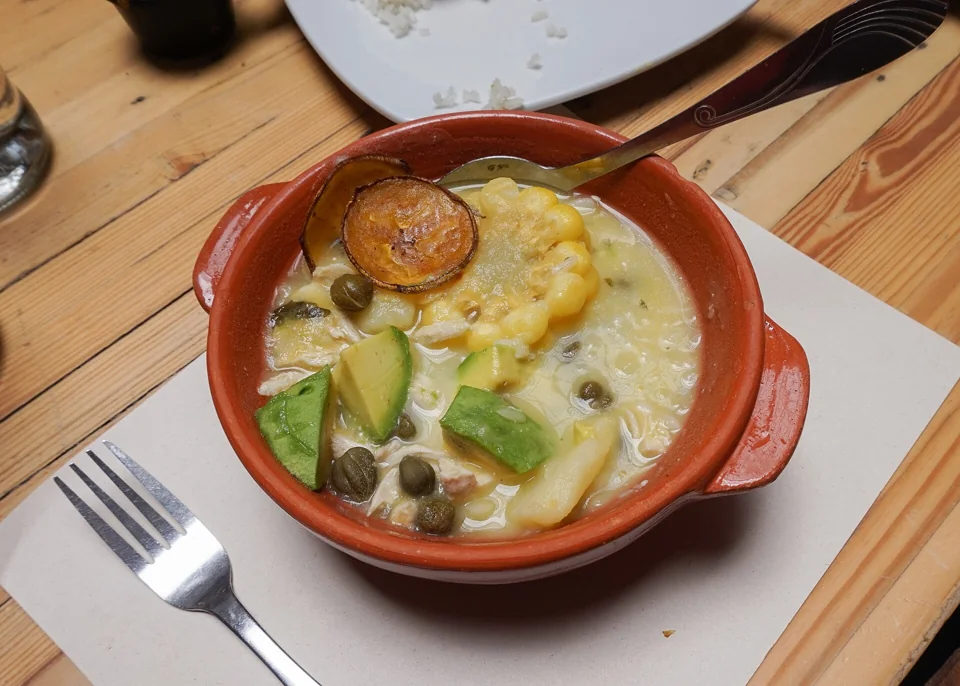
Ajiaco
A warming chicken-and-potato soup made with several potato varieties and guascas. It is often served with corn, avocado, cream and capers; ask how a restaurant serves its own version.
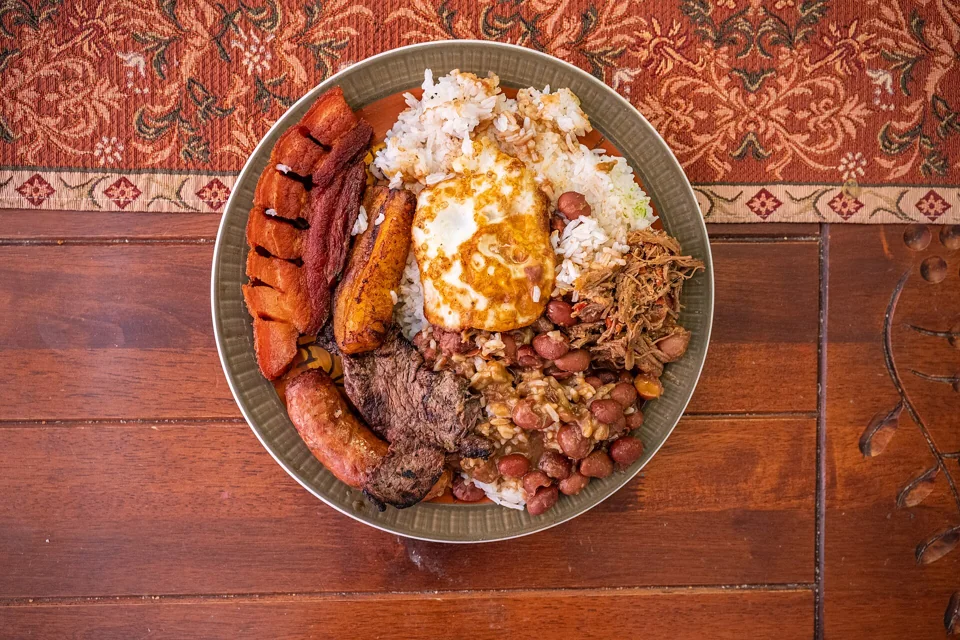
Bandeja paisa
A generous platter built around beans and rice, with components such as ground beef, chicharrón, chorizo, egg, plantain, arepa and avocado. Portions and accompaniments vary.
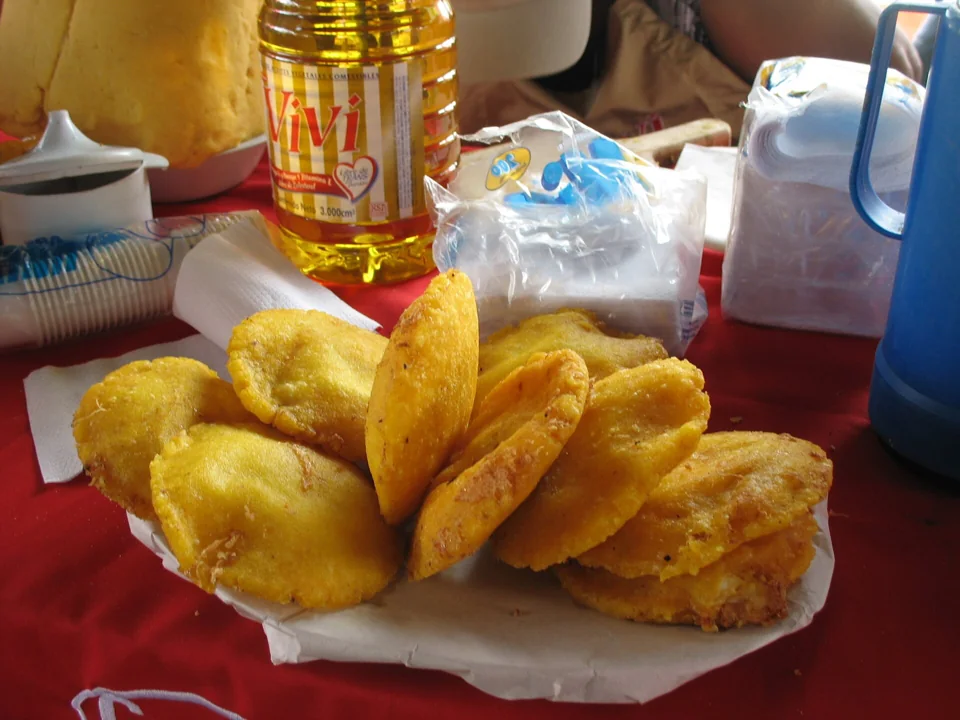
Arepas
Corn cakes with regional shapes, textures and fillings. Arepa de huevo is fried and filled with egg; arepa de chócolo is made with sweet corn and is often paired with cheese.
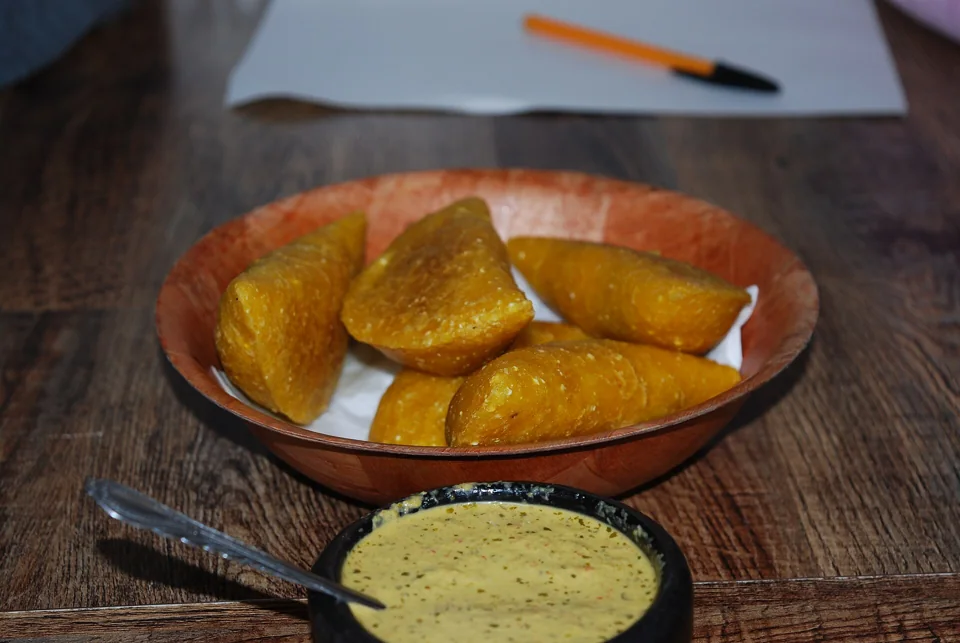
Empanadas
Crisp, usually fried corn-dough parcels filled with combinations such as potato, meat or vegetables. The ají and filling differ by vendor, so ask before ordering a batch.
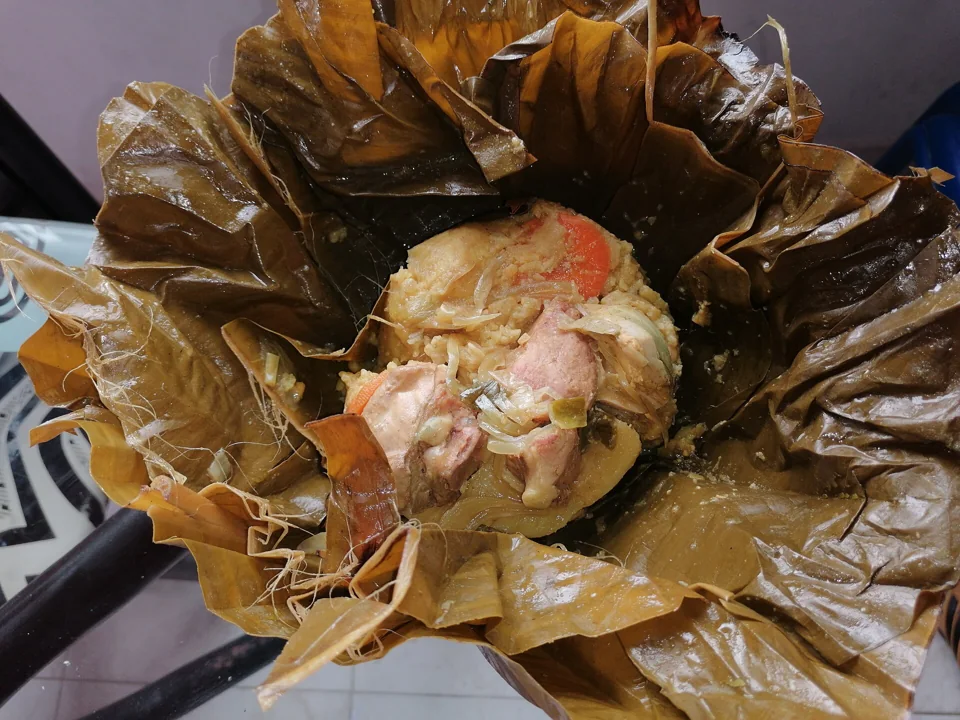
Tamal
Seasoned masa and fillings are wrapped in leaves and steamed. A Tolima-style tamal can include meat, vegetables and rice; other regions use different proportions and shapes.
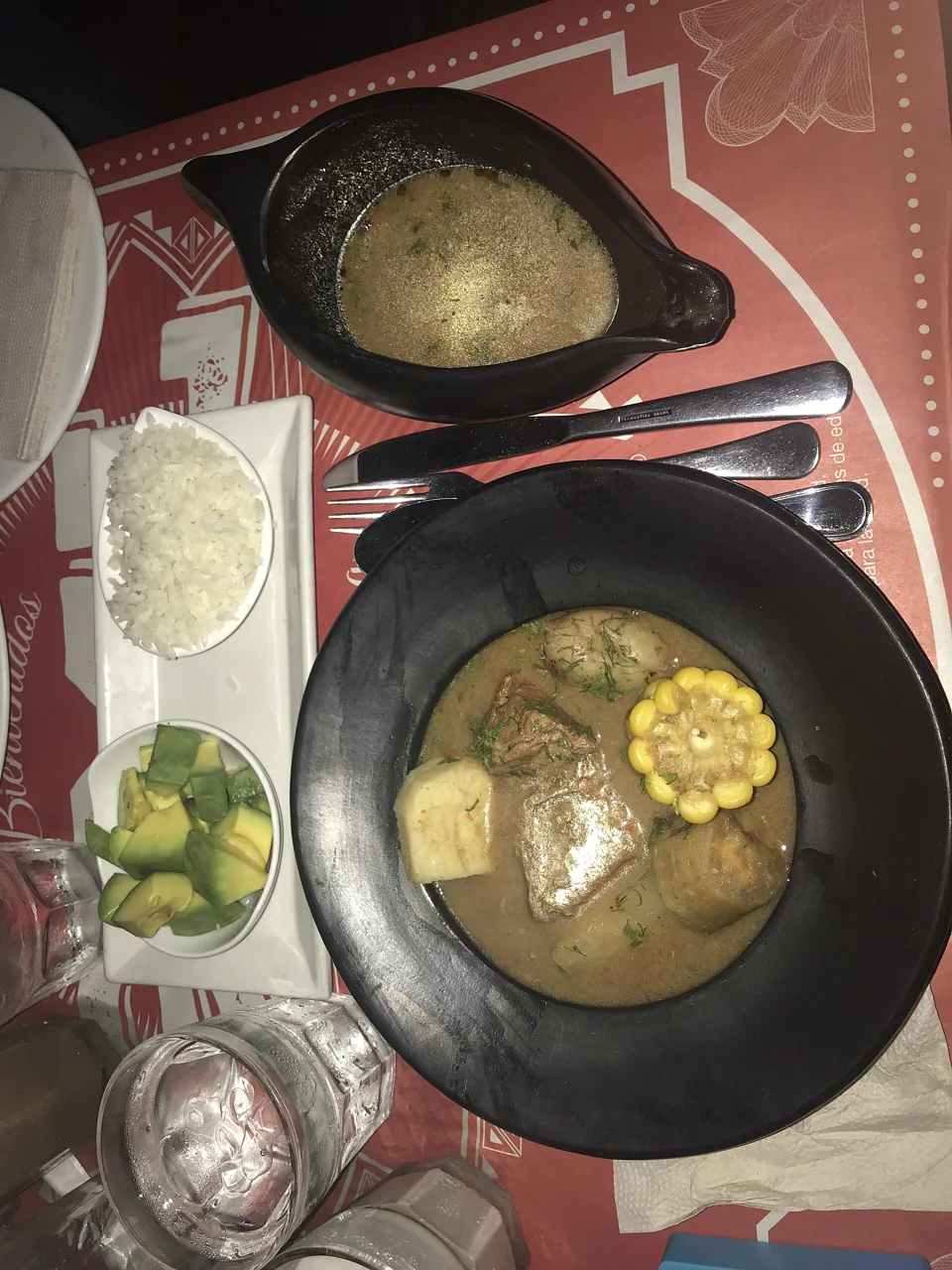
Sancocho
A substantial soup rather than one single recipe. Chicken, beef, fish or other proteins meet yuca, plantain, corn and potatoes according to the region and the cook.
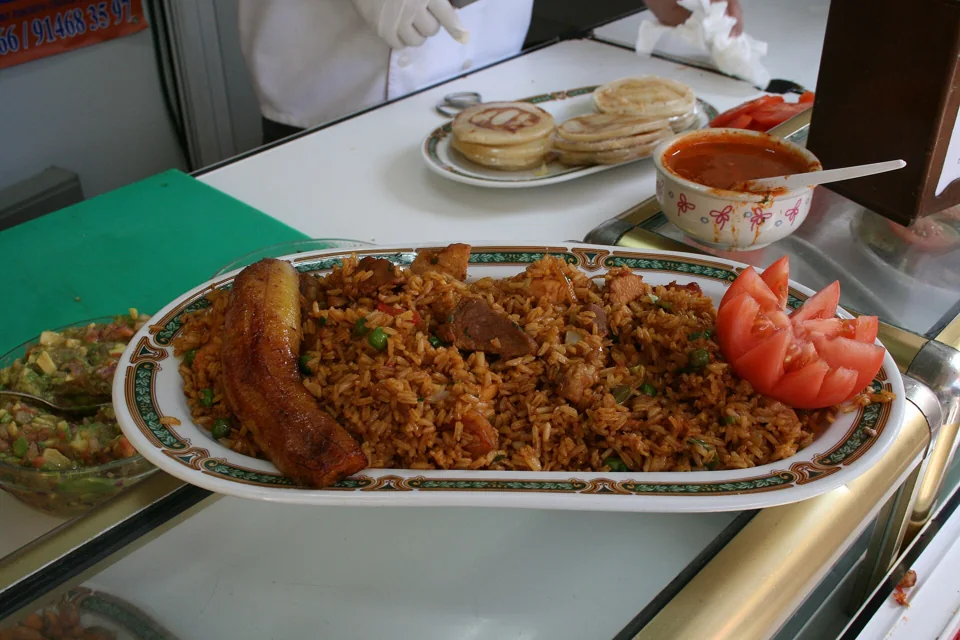
Lechona
Slow-roasted pork traditionally prepared with a seasoned filling that commonly includes rice and peas. It is often sold as a celebratory or special-occasion meal.
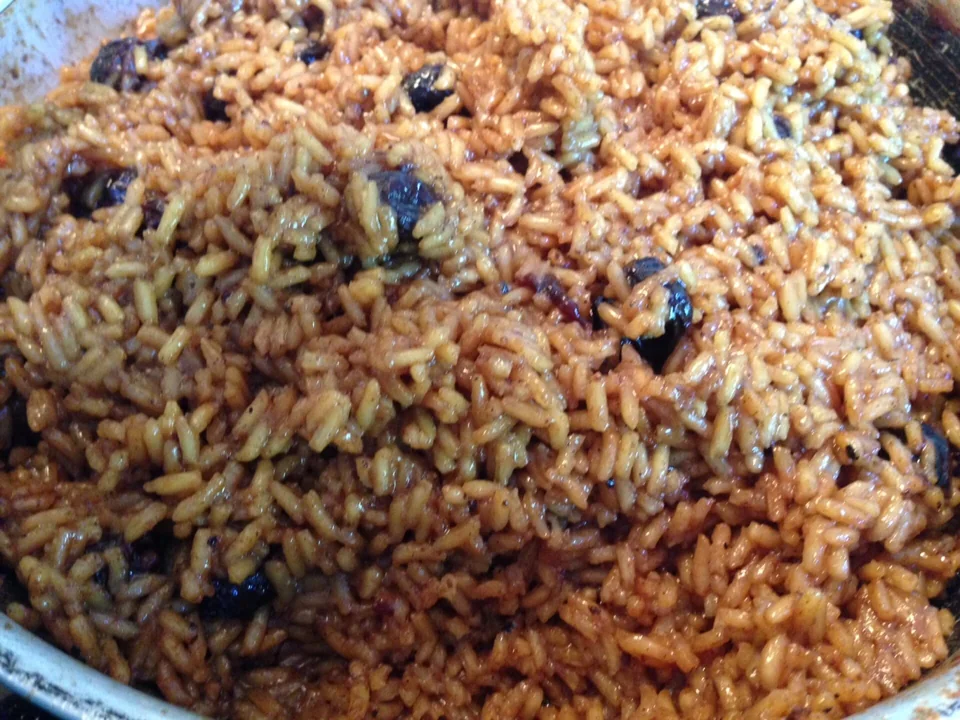
Arroz con coco
Rice cooked with coconut, served as a sweet or savory preparation depending on the dish. On the coast it commonly accompanies fish or seafood; confirm the day’s pairing.
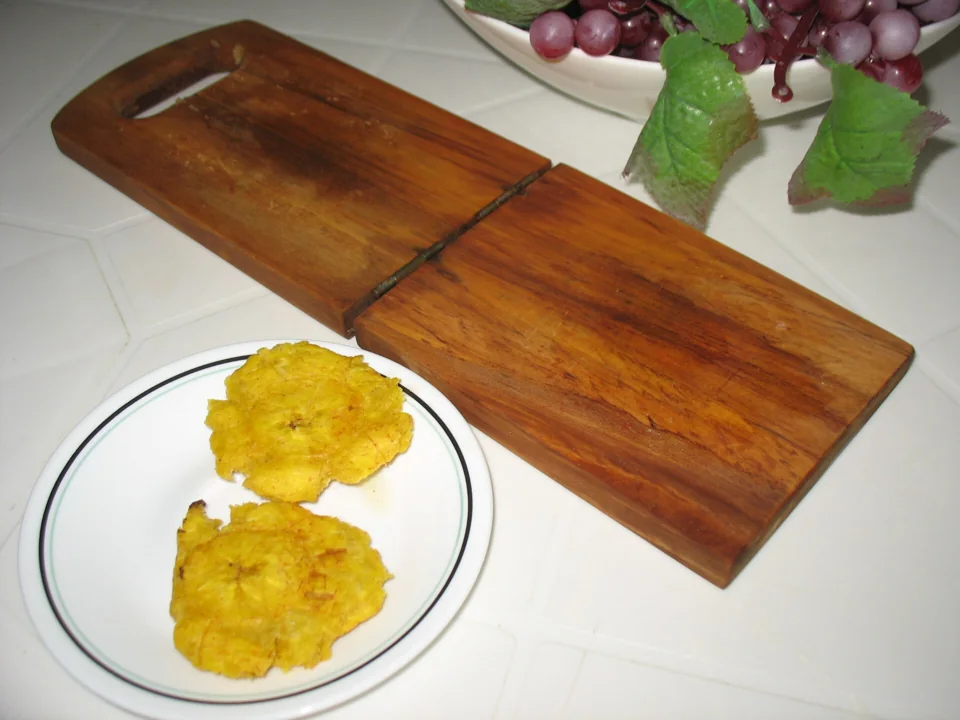
Patacones
Green plantain pieces that are fried, flattened and fried again. They can arrive beside a meal or with toppings; texture and thickness vary from kitchen to kitchen.
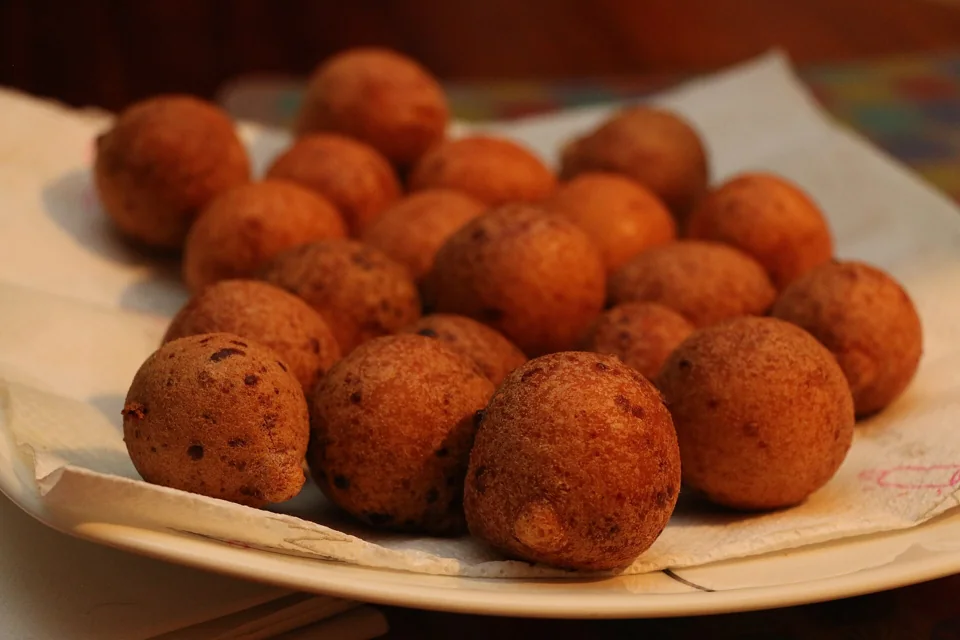
Buñuelos
Light, round cheese breads made from a dough that is fried until browned outside. They are commonly eaten warm with coffee or another breakfast drink.
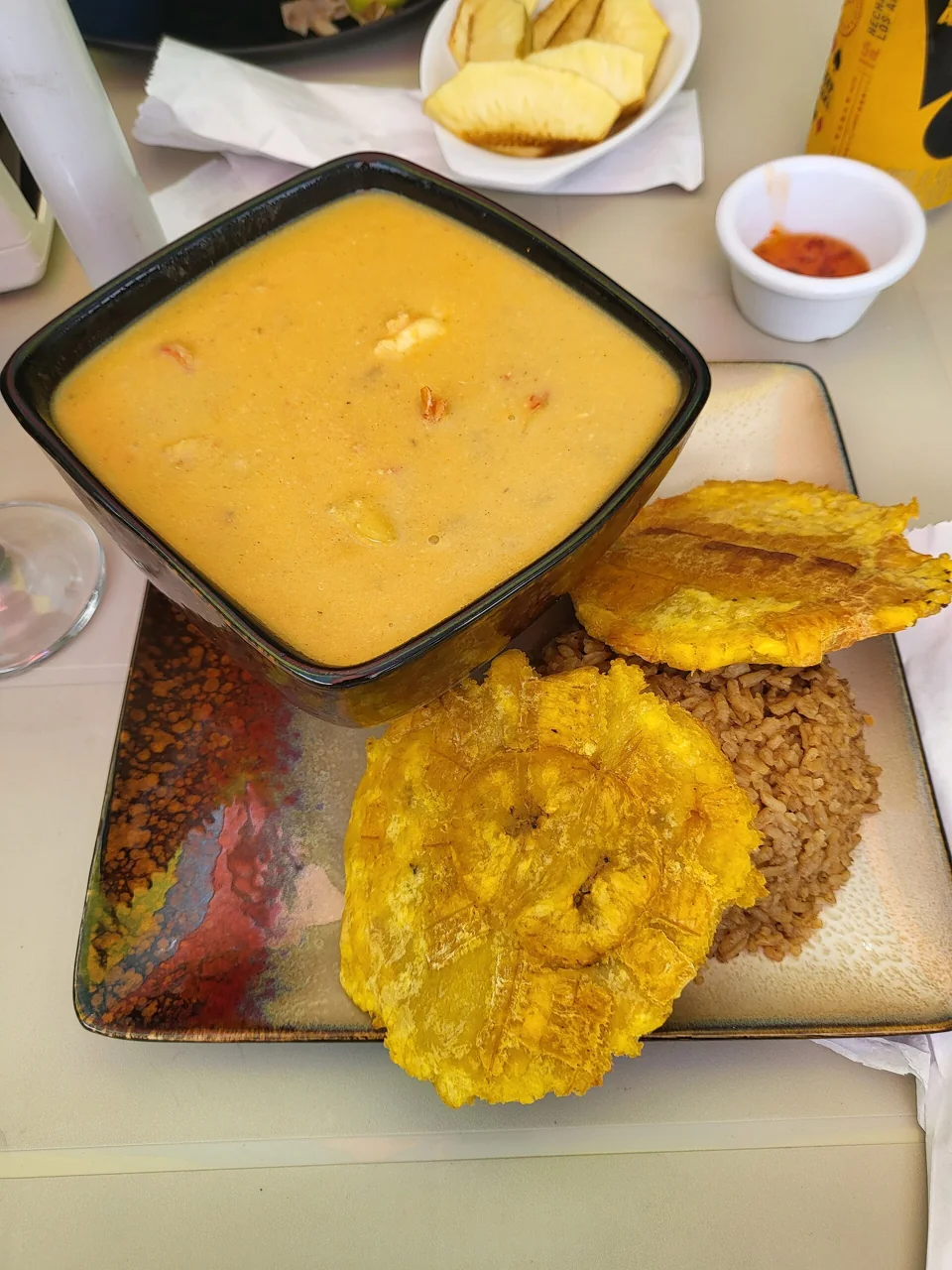
Cazuela de mariscos
A rich seafood stew whose ingredients and base differ by restaurant. Ask what is in the pot, especially if you have a shellfish allergy, and check whether the price is fixed.
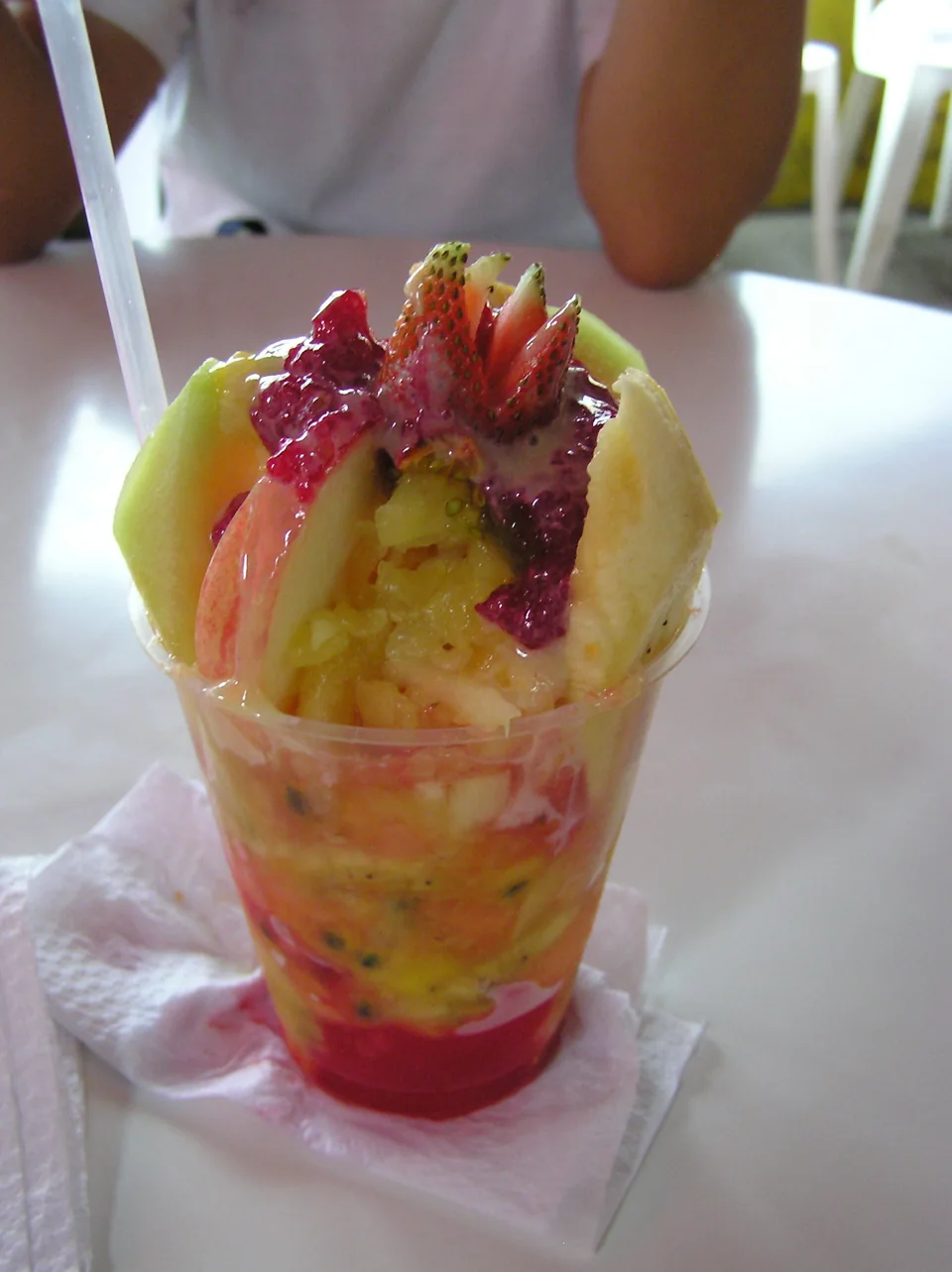
Cholado
Shaved ice layered with fruit, syrups and commonly condensed milk. It is a cooling street dessert in the Valle del Cauca; sweetness and toppings are highly personal.
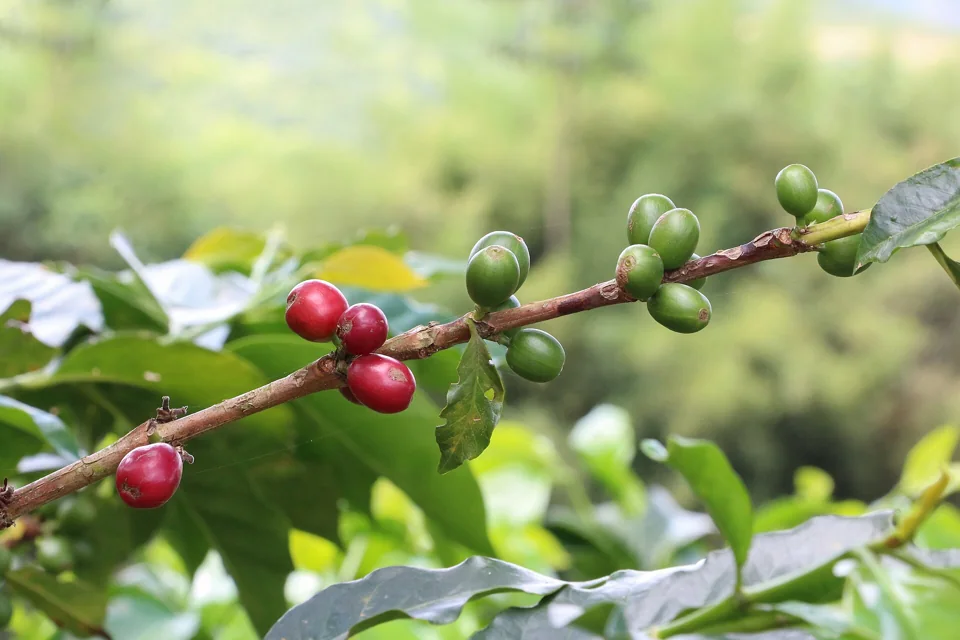
Follow the ingredients by region
A dish carries climate, history and local habit. Let the photographs lead you to the regional notes.
Ask about ingredients explicitly
If you have an allergy or a dietary restriction, explain it clearly and ask about stocks, sauces and preparation as well as the main ingredient. “No meat” does not necessarily communicate a requirement to avoid chicken stock, and an English menu is not an allergen guarantee.
Use a written Spanish explanation of a serious allergy prepared with appropriate help. If the kitchen cannot confidently answer, choose another option. For seafood, ask whether a shared fryer, stock or sauce is involved.
Make eating part of your move research
Try one familiar meal and one local specialty when you visit a possible home. Note portion size, opening hours, delivery options, market access and how easy it is to explain a dietary need. A food routine tells you something practical about a neighborhood that a weekend tasting menu cannot.
- Price the ingredients you regularly use, not only an inexpensive lunch special.
- Check whether the apartment has the cooking equipment and storage you need.
- Visit a market with time to ask about quantities and seasonal produce.
- Record food spending for a normal week before setting a monthly allowance.
There is no promised city-wide meal price here. Menus, portions and neighborhoods vary, and a relocation budget should reflect how you actually eat.
A short Spanish food script
“¿Qué lleva este plato?” asks what is in the dish. “¿Tiene caldo de pollo?” asks whether it contains chicken stock. “¿Cuánto cuesta en total?” confirms the full price. If the answer is uncertain, choose something else rather than guessing about an allergy or an unfamiliar charge.
Sources and next checks
Reference links for the rules, data and context discussed here. Official sources, market snapshots and community anecdotes are identified by their titles. Recheck time-sensitive requirements before applying, paying or travelling. Planning checklists are editorial suggestions, not official requirements.